


Local Builder – Valor Development
Building in Westcliffe isn’t like building in most places—and that’s where many projects start to go wrong.
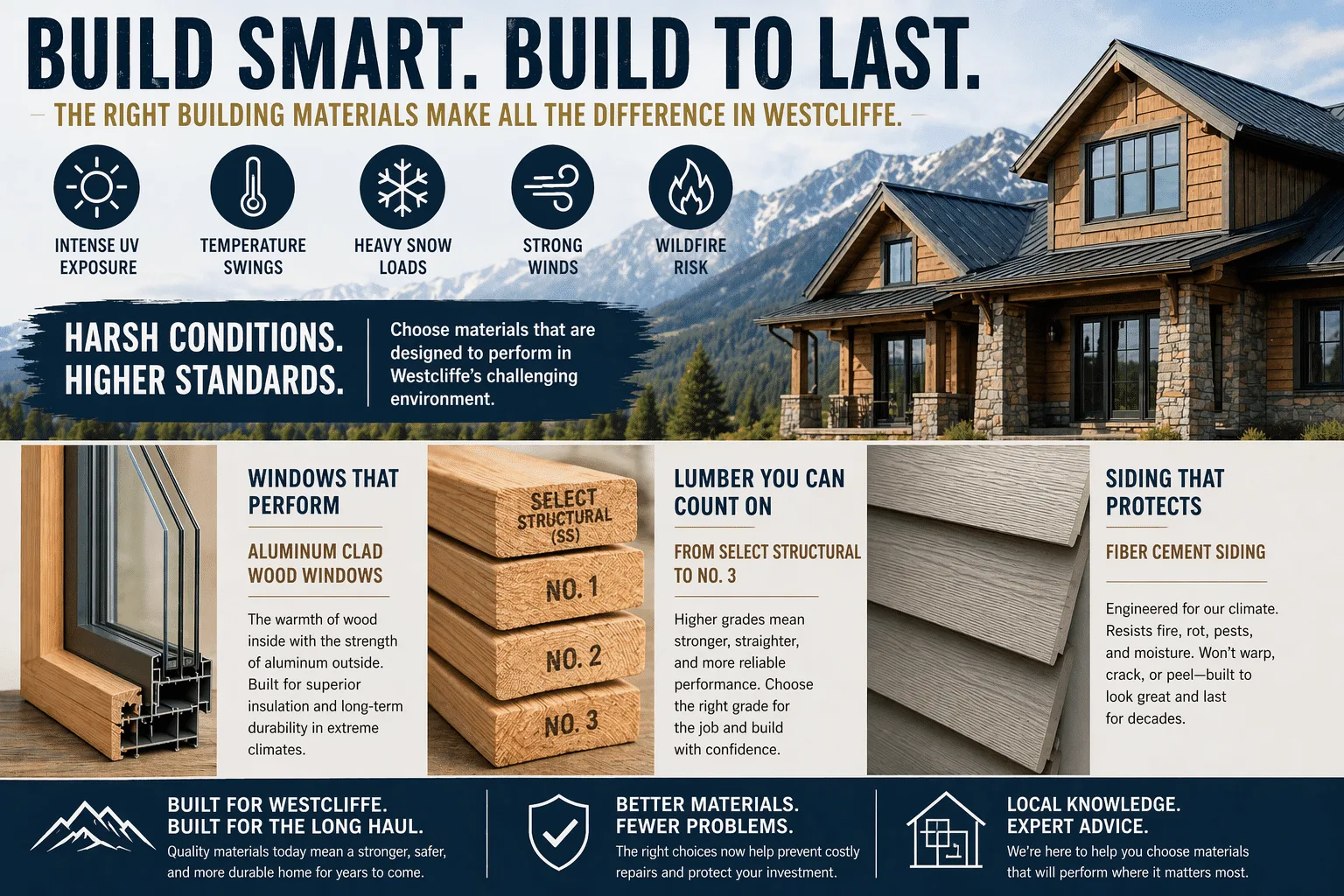
At nearly 8,000 feet, materials are exposed to intense UV radiation, dramatic temperature swings, heavy snow loads, and consistent wind. These conditions don’t just wear materials down over time—they actively test them from day one.
And the reality is, many building products are not designed for this kind of environment.
With decades in the building industry, we’ve seen what happens when the wrong materials are used. Lumber that warps after a single winter. Windows that lose efficiency far sooner than expected. Exterior materials that simply don’t hold up under constant exposure.
In most cases, the issue isn’t installation—it’s that the materials themselves weren’t built for where they’re being used. I’ve got three products we recommend you choose as your main building materials in Westcliffe.
Building Material #1: Choosing the Right Windows for High Altitude
Windows are one of the first places where material quality really shows.
Vinyl windows can be a cost-effective option in some environments, but in high-altitude conditions like ours, they don’t always perform as well over time. Constant UV exposure and temperature fluctuations can lead to warping, seal failure, and reduced efficiency.
That’s why we often recommend Sierra Pacific Windows.
With a wood interior for strength and insulation and an aluminum-clad exterior for protection, they are designed to handle harsh weather conditions while maintaining long-term performance. Their construction helps them withstand sun exposure, moisture, and temperature fluctuations far better than many standard options.
Building Material #2: Why a 2×4 Is Not “Just a 2×4”
People assume lumber is interchangeable. Same size, same purpose—what’s the difference?
Well… a lot, actually.
Lower-grade lumber—like standard Southern Yellow Pine—is often used because it’s cheaper and widely available. But in a climate like ours, it tends to be less stable. Changes in moisture and temperature can lead to warping, twisting, shrinking, and general unpredictability. Which is exactly what you don’t want in something holding your structure together.
That’s where Select Strut Lumber comes in. Select Strut is graded for strength and consistency, meaning tighter tolerances, fewer defects, and significantly better stability over time. It’s the kind of lumber that behaves the way you expect it to—no surprises, no mid-project regrets, no callbacks because something decided to move after installation.
Because here’s the reality: when lumber fails, it doesn’t do it politely. It shows up as uneven walls, shifting frames, and a whole list of problems that are expensive to fix and easy to avoid.
So no—a 2×4 is not “just a 2×4.” That idea has probably cost people more money than they’d like to admit. Be sure to ask when you are calling in 40 different places for pricing, that you ask them what grade of lumber you are getting quoted. This small amount of savings could cost you in labor and additional calls or fixes later.
Building Material #3: Siding That Balances Durability and Fire Resistance
Siding plays a major role in both durability and safety—especially in a dry, fire-prone area like ours.
Wood siding can offer a beautiful, natural look, but it typically requires more maintenance and carries a greater risk in areas with ongoing fire concerns.
For many projects, we recommend James Hardie siding.

As a fiber cement product, it is:
- Non-combustible, making it a safer choice in fire-prone environments
- Highly resistant to UV damage and weather exposure
- Designed to remain stable through temperature changes
It provides the look of traditional siding with significantly improved durability and lower long-term maintenance.
Download the James Hardie Siding Catalog HERE.
Building for the Conditions That Actually Exist
The most important takeaway is this: building materials should be selected based on the conditions they will face—not just price or availability.
In Westcliffe, those conditions are demanding. And materials that aren’t designed for them tend to show their weaknesses quickly.
After decades in the industry, we’ve learned that the right materials don’t just improve performance—they prevent problems before they start.
If you’re building in this area, it’s worth choosing products that are designed to handle it.
Learn More
If you’d like more information about the products we carry and recommend, stop by and talk with our experts at the Pro Desk. We’re always happy to help you choose materials that will perform well for your project.